Buy cigs.eu ?
We are moving the project
cigs.eu .
Are you interested in purchasing the domain
cigs.eu ?
domain@kv-gmbh.de · 0541-91531010
Buy cigs.eu ?
Have our exoplanets already been examined?
Yes, exoplanets have been examined by astronomers using various methods such as the transit method, radial velocity method, and direct imaging. These methods have allowed scientists to gather information about the size, composition, atmosphere, and potential habitability of exoplanets. Additionally, ongoing and future missions, such as the James Webb Space Telescope, will continue to study exoplanets in more detail. **
Have our exoplanets already been studied?
Yes, exoplanets have been extensively studied by astronomers using various methods such as transit photometry, radial velocity measurements, and direct imaging. These studies have provided valuable insights into the characteristics of exoplanets, such as their size, composition, and orbit. Additionally, ongoing and future missions, such as the James Webb Space Telescope, will continue to expand our knowledge of exoplanets and their potential for hosting life. **


Similar search terms for Exoplanets
Top-Angebote
Products related to Exoplanets:
-
Sesderma Reti Age 5 Liposomal Serum Anti-Aging Innovation 30mLA facial serum for wrinkles and signs of ageing. Reduces wrinkles and fine lines. Hydrates and strengthens barrier. Restores youthful radiance. 5-Retinoid System: smooths wrinkles, accelerates renewal, and boosts collagen. Biomimetic Peptides: fill expression lines by stimulating collagen synthesis.54,51 £*Shipping: 5,34 £Secure redirect to the provider
-
All Categories Goods LED Solar Motion Sensor Outdoor Security Wall Lights Waterproof & Energy Efficient LED Solar Motion Sensor Outdoor Security Wall Lights Waterproof & Energy EfficientIlluminate your home with the power of the sun with the 1 pc of 168 LED Solar Motion Sensor Outdoor Security Wall Lights. Designed for homeowners seeking reliable, ecofriendly lighting solutions, these outdoor lights offer superior security and...44,97 $*Shipping: 0,00 $Secure redirect to the provider
-
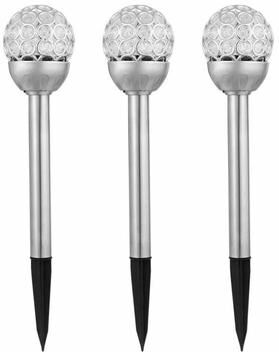
Multicon Wholesale Hub Waterproof Outdoor Solar LED Ground Light, RGB Lamp For Garden, Yard, Path Decor, Energy Saving Solar Waterproof Outdoor Solar LED Ground Light, RGB Lamp For Garden, Yard, Path Decor, Energy Saving SolarBright and Durable Solar Garden Lighting Enhance your outdoor spaces with these 3 Solar LED Ground Light Ball RGB Lamps, designed to provide both beauty and functionality. Crafted from premium stainless steel and ABS plastic, these solar lights are...59,97 $*Shipping: 0,00 $Secure redirect to the provider



-
Have our exoplanets already been investigated?
Yes, exoplanets have been extensively investigated by astronomers using various methods such as the transit method, radial velocity method, and direct imaging. These investigations have revealed a wide range of exoplanets with different sizes, compositions, and orbital characteristics. Scientists continue to study exoplanets to better understand their formation, evolution, and potential for hosting life. **
-
Why do exoplanets not have names yet?
Exoplanets do not have official names yet because the International Astronomical Union (IAU) is responsible for naming celestial bodies, and they have not yet established a formal naming process for exoplanets. Additionally, there are thousands of exoplanets that have been discovered, and it would be a complex and time-consuming task to come up with unique and meaningful names for each one. For now, exoplanets are typically referred to by a combination of letters and numbers based on the star they orbit, such as "Kepler-186f" or "TRAPPIST-1e." **
-
How do people travel to other exoplanets?
Currently, people do not travel to other exoplanets. The distances to exoplanets are so vast that it would take thousands of years using current technology to reach even the closest ones. Additionally, we have not yet developed the technology to sustain human life for such long journeys. However, there is ongoing research and development into advanced propulsion systems, life support systems, and spacecraft design that may one day make interstellar travel a possibility. **
-
Have moons of exoplanets ever been discovered?
Yes, moons of exoplanets have been discovered. One example is the exomoon candidate Kepler-1625b I, which was detected in 2018 using data from the Kepler Space Telescope. This discovery suggests that exomoons may be more common than previously thought, and it opens up the possibility of finding even more moons around exoplanets in the future. The study of exomoons is an exciting area of research that could provide valuable insights into the formation and evolution of planetary systems beyond our own. **


Why is the question about exoplanets so interesting?
The question about exoplanets is so interesting because it has the potential to expand our understanding of the universe and our place within it. Discovering and studying exoplanets can provide insights into the formation and evolution of planetary systems, as well as the potential for life beyond Earth. Additionally, the search for exoplanets pushes the boundaries of technology and observational techniques, driving advancements in astronomy and space exploration. Ultimately, the study of exoplanets has the potential to answer fundamental questions about the nature of the cosmos and our place in it. **
Can the James Webb Telescope take pictures of exoplanets?
Yes, the James Webb Telescope has the capability to take pictures of exoplanets. It is equipped with a specialized instrument called the Near Infrared Camera (NIRCam) that is designed to capture images of distant planets orbiting other stars. By using its advanced technology and positioning, the telescope will be able to observe and photograph exoplanets, providing valuable insights into their atmospheres and potential habitability. **
Top-Angebote
Products related to Exoplanets:
-
All Categories Goods LED Solar Security Light Dual Motion Sensor Outdoor Floodlight With LED Technology For Energy Efficient Illumination LED Solar Security Light Dual Motion Sensor Outdoor Floodlight With LED Technology For Energy Efficient IlluminationBrighten your outdoor space with the 1 pcs of 22 LED Solar Security Light, designed for maximum visibility and security. Powered by ecofriendly solar energy, this motion sensor floodlight activates when movement is detected, offering both...63,97 $*Shipping: 0,00 $Secure redirect to the provider
-
All Categories Goods Waterproof LED Solar Motion Sensor Light For Garden Wall With PIR Technology Waterproof LED Solar Motion Sensor Light For Garden Wall With PIR TechnologyIlluminate your outdoors with the 1 pc of Waterproof Solar Power Lights featuring 468 highintensity LEDs. Ideal for gardens, patios, or any outdoor space, this energyefficient light uses solar power, ensuring a green and sustainable lighting...56,97 $*Shipping: 0,00 $Secure redirect to the provider
-
Sesderma Reti Age 5 Liposomal Serum Anti-Aging Innovation 30mLA facial serum for wrinkles and signs of ageing. Reduces wrinkles and fine lines. Hydrates and strengthens barrier. Restores youthful radiance. 5-Retinoid System: smooths wrinkles, accelerates renewal, and boosts collagen. Biomimetic Peptides: fill expression lines by stimulating collagen synthesis.54,51 £*Shipping: 5,34 £Secure redirect to the provider
-
All Categories Goods LED Solar Motion Sensor Outdoor Security Wall Lights Waterproof & Energy Efficient LED Solar Motion Sensor Outdoor Security Wall Lights Waterproof & Energy EfficientIlluminate your home with the power of the sun with the 1 pc of 168 LED Solar Motion Sensor Outdoor Security Wall Lights. Designed for homeowners seeking reliable, ecofriendly lighting solutions, these outdoor lights offer superior security and...44,97 $*Shipping: 0,00 $Secure redirect to the provider
-
Have our exoplanets already been examined?
Yes, exoplanets have been examined by astronomers using various methods such as the transit method, radial velocity method, and direct imaging. These methods have allowed scientists to gather information about the size, composition, atmosphere, and potential habitability of exoplanets. Additionally, ongoing and future missions, such as the James Webb Space Telescope, will continue to study exoplanets in more detail. **
-
Have our exoplanets already been studied?
Yes, exoplanets have been extensively studied by astronomers using various methods such as transit photometry, radial velocity measurements, and direct imaging. These studies have provided valuable insights into the characteristics of exoplanets, such as their size, composition, and orbit. Additionally, ongoing and future missions, such as the James Webb Space Telescope, will continue to expand our knowledge of exoplanets and their potential for hosting life. **
-
Have our exoplanets already been investigated?
Yes, exoplanets have been extensively investigated by astronomers using various methods such as the transit method, radial velocity method, and direct imaging. These investigations have revealed a wide range of exoplanets with different sizes, compositions, and orbital characteristics. Scientists continue to study exoplanets to better understand their formation, evolution, and potential for hosting life. **
-
Why do exoplanets not have names yet?
Exoplanets do not have official names yet because the International Astronomical Union (IAU) is responsible for naming celestial bodies, and they have not yet established a formal naming process for exoplanets. Additionally, there are thousands of exoplanets that have been discovered, and it would be a complex and time-consuming task to come up with unique and meaningful names for each one. For now, exoplanets are typically referred to by a combination of letters and numbers based on the star they orbit, such as "Kepler-186f" or "TRAPPIST-1e." **
Similar search terms for Exoplanets
-
Multicon Wholesale Hub Waterproof Outdoor Solar LED Ground Light, RGB Lamp For Garden, Yard, Path Decor, Energy Saving Solar Waterproof Outdoor Solar LED Ground Light, RGB Lamp For Garden, Yard, Path Decor, Energy Saving SolarBright and Durable Solar Garden Lighting Enhance your outdoor spaces with these 3 Solar LED Ground Light Ball RGB Lamps, designed to provide both beauty and functionality. Crafted from premium stainless steel and ABS plastic, these solar lights are...59,97 $*Shipping: 0,00 $Secure redirect to the provider
-
How do people travel to other exoplanets?
Currently, people do not travel to other exoplanets. The distances to exoplanets are so vast that it would take thousands of years using current technology to reach even the closest ones. Additionally, we have not yet developed the technology to sustain human life for such long journeys. However, there is ongoing research and development into advanced propulsion systems, life support systems, and spacecraft design that may one day make interstellar travel a possibility. **
-
Have moons of exoplanets ever been discovered?
Yes, moons of exoplanets have been discovered. One example is the exomoon candidate Kepler-1625b I, which was detected in 2018 using data from the Kepler Space Telescope. This discovery suggests that exomoons may be more common than previously thought, and it opens up the possibility of finding even more moons around exoplanets in the future. The study of exomoons is an exciting area of research that could provide valuable insights into the formation and evolution of planetary systems beyond our own. **
-
Why is the question about exoplanets so interesting?
The question about exoplanets is so interesting because it has the potential to expand our understanding of the universe and our place within it. Discovering and studying exoplanets can provide insights into the formation and evolution of planetary systems, as well as the potential for life beyond Earth. Additionally, the search for exoplanets pushes the boundaries of technology and observational techniques, driving advancements in astronomy and space exploration. Ultimately, the study of exoplanets has the potential to answer fundamental questions about the nature of the cosmos and our place in it. **
-
Can the James Webb Telescope take pictures of exoplanets?
Yes, the James Webb Telescope has the capability to take pictures of exoplanets. It is equipped with a specialized instrument called the Near Infrared Camera (NIRCam) that is designed to capture images of distant planets orbiting other stars. By using its advanced technology and positioning, the telescope will be able to observe and photograph exoplanets, providing valuable insights into their atmospheres and potential habitability. **
* All prices are inclusive of VAT and, if applicable, plus shipping costs. The offer information is based on the details provided by the respective shop and is updated through automated processes. Real-time updates do not occur, so deviations can occur in individual cases. ** Note: Parts of this content were created by AI.