Buy cigs.eu ?
We are moving the project
cigs.eu .
Are you interested in purchasing the domain
cigs.eu ?
domain@kv-gmbh.de · 0541-91531010
Buy cigs.eu ?
How can one convert the energy of different photons into monochromatic photons?
One way to convert the energy of different photons into monochromatic photons is through a process called frequency doubling or second harmonic generation. This involves passing the photons through a nonlinear crystal, which causes the photons to combine and create new photons with double the frequency and half the wavelength of the original photons. This results in monochromatic photons with a single, specific wavelength. Another method is through the use of filters or monochromators, which can selectively filter out photons of specific wavelengths, allowing only monochromatic photons to pass through. **
How do you calculate the energy of photons?
The energy of a photon can be calculated using the equation E = hf, where E is the energy of the photon, h is Planck's constant (6.626 x 10^-34 J*s), and f is the frequency of the photon in hertz. Alternatively, the energy of a photon can also be calculated using the equation E = hc/λ, where c is the speed of light (3.00 x 10^8 m/s) and λ is the wavelength of the photon in meters. By using either of these equations, one can determine the energy carried by a photon based on its frequency or wavelength. **


Similar search terms for Photons
Top-Angebote
Products related to Photons:
-
Sesderma Reti Age 5 Liposomal Serum Anti-Aging Innovation 30mLA facial serum for wrinkles and signs of ageing. Reduces wrinkles and fine lines. Hydrates and strengthens barrier. Restores youthful radiance. 5-Retinoid System: smooths wrinkles, accelerates renewal, and boosts collagen. Biomimetic Peptides: fill expression lines by stimulating collagen synthesis.54,51 £*Shipping: 5,34 £Secure redirect to the provider
-
All Categories Goods LED Solar Motion Sensor Outdoor Security Wall Lights Waterproof & Energy Efficient LED Solar Motion Sensor Outdoor Security Wall Lights Waterproof & Energy EfficientIlluminate your home with the power of the sun with the 1 pc of 168 LED Solar Motion Sensor Outdoor Security Wall Lights. Designed for homeowners seeking reliable, ecofriendly lighting solutions, these outdoor lights offer superior security and...44,97 $*Shipping: 0,00 $Secure redirect to the provider
-
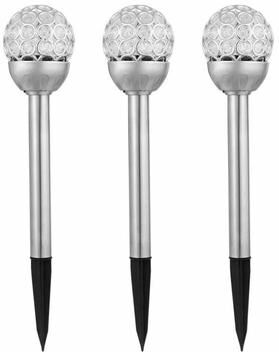
Multicon Wholesale Hub Waterproof Outdoor Solar LED Ground Light, RGB Lamp For Garden, Yard, Path Decor, Energy Saving Solar Waterproof Outdoor Solar LED Ground Light, RGB Lamp For Garden, Yard, Path Decor, Energy Saving SolarBright and Durable Solar Garden Lighting Enhance your outdoor spaces with these 3 Solar LED Ground Light Ball RGB Lamps, designed to provide both beauty and functionality. Crafted from premium stainless steel and ABS plastic, these solar lights are...59,97 $*Shipping: 0,00 $Secure redirect to the provider



-
Are photons electrons?
No, photons are not electrons. Photons are elementary particles that make up light and electromagnetic radiation, while electrons are negatively charged subatomic particles that are part of atoms. Photons have no mass and travel at the speed of light, while electrons have mass and are bound to the nucleus of an atom. **
-
How are photons created?
Photons are created through a process called electromagnetic radiation. This occurs when an atom absorbs energy, causing its electrons to move to a higher energy level. When the electrons return to their original energy level, they release the absorbed energy in the form of photons. This process can happen in various ways, such as through thermal radiation, chemical reactions, or nuclear reactions. **
-
What happens to photons?
Photons are elementary particles that make up light. They do not have mass and travel at the speed of light. When photons interact with matter, they can be absorbed, reflected, or transmitted. Absorption of photons can result in the excitation of electrons, leading to various physical and chemical processes. **
-
Do photons with higher or lower energy experience stronger attenuation?
Photons with higher energy experience stronger attenuation. This is because higher energy photons have a greater ability to interact with matter, leading to increased chances of absorption or scattering. As a result, higher energy photons are more likely to be attenuated as they pass through a material, making them more effective for processes such as medical imaging and radiation therapy. **


How can photons have mass?
Photons are massless particles according to the Standard Model of particle physics. They travel at the speed of light and have zero rest mass. However, in certain theoretical models beyond the Standard Model, such as some versions of string theory, it is possible for photons to acquire a small amount of mass through interactions with other particles or fields. This mass is typically very small and has not been experimentally observed. **
What distinguishes photons and protons?
Photons are elementary particles that carry electromagnetic radiation, such as light, while protons are subatomic particles found in the nucleus of an atom. Photons have no mass and travel at the speed of light, while protons have mass and are composed of quarks. Additionally, photons do not have an electric charge, while protons have a positive electric charge. **
Top-Angebote
Products related to Photons:
-
All Categories Goods LED Solar Security Light Dual Motion Sensor Outdoor Floodlight With LED Technology For Energy Efficient Illumination LED Solar Security Light Dual Motion Sensor Outdoor Floodlight With LED Technology For Energy Efficient IlluminationBrighten your outdoor space with the 1 pcs of 22 LED Solar Security Light, designed for maximum visibility and security. Powered by ecofriendly solar energy, this motion sensor floodlight activates when movement is detected, offering both...63,97 $*Shipping: 0,00 $Secure redirect to the provider
-
All Categories Goods Waterproof LED Solar Motion Sensor Light For Garden Wall With PIR Technology Waterproof LED Solar Motion Sensor Light For Garden Wall With PIR TechnologyIlluminate your outdoors with the 1 pc of Waterproof Solar Power Lights featuring 468 highintensity LEDs. Ideal for gardens, patios, or any outdoor space, this energyefficient light uses solar power, ensuring a green and sustainable lighting...56,97 $*Shipping: 0,00 $Secure redirect to the provider
-
Sesderma Reti Age 5 Liposomal Serum Anti-Aging Innovation 30mLA facial serum for wrinkles and signs of ageing. Reduces wrinkles and fine lines. Hydrates and strengthens barrier. Restores youthful radiance. 5-Retinoid System: smooths wrinkles, accelerates renewal, and boosts collagen. Biomimetic Peptides: fill expression lines by stimulating collagen synthesis.54,51 £*Shipping: 5,34 £Secure redirect to the provider
-
All Categories Goods LED Solar Motion Sensor Outdoor Security Wall Lights Waterproof & Energy Efficient LED Solar Motion Sensor Outdoor Security Wall Lights Waterproof & Energy EfficientIlluminate your home with the power of the sun with the 1 pc of 168 LED Solar Motion Sensor Outdoor Security Wall Lights. Designed for homeowners seeking reliable, ecofriendly lighting solutions, these outdoor lights offer superior security and...44,97 $*Shipping: 0,00 $Secure redirect to the provider
-
How can one convert the energy of different photons into monochromatic photons?
One way to convert the energy of different photons into monochromatic photons is through a process called frequency doubling or second harmonic generation. This involves passing the photons through a nonlinear crystal, which causes the photons to combine and create new photons with double the frequency and half the wavelength of the original photons. This results in monochromatic photons with a single, specific wavelength. Another method is through the use of filters or monochromators, which can selectively filter out photons of specific wavelengths, allowing only monochromatic photons to pass through. **
-
How do you calculate the energy of photons?
The energy of a photon can be calculated using the equation E = hf, where E is the energy of the photon, h is Planck's constant (6.626 x 10^-34 J*s), and f is the frequency of the photon in hertz. Alternatively, the energy of a photon can also be calculated using the equation E = hc/λ, where c is the speed of light (3.00 x 10^8 m/s) and λ is the wavelength of the photon in meters. By using either of these equations, one can determine the energy carried by a photon based on its frequency or wavelength. **
-
Are photons electrons?
No, photons are not electrons. Photons are elementary particles that make up light and electromagnetic radiation, while electrons are negatively charged subatomic particles that are part of atoms. Photons have no mass and travel at the speed of light, while electrons have mass and are bound to the nucleus of an atom. **
-
How are photons created?
Photons are created through a process called electromagnetic radiation. This occurs when an atom absorbs energy, causing its electrons to move to a higher energy level. When the electrons return to their original energy level, they release the absorbed energy in the form of photons. This process can happen in various ways, such as through thermal radiation, chemical reactions, or nuclear reactions. **
Similar search terms for Photons
-
Multicon Wholesale Hub Waterproof Outdoor Solar LED Ground Light, RGB Lamp For Garden, Yard, Path Decor, Energy Saving Solar Waterproof Outdoor Solar LED Ground Light, RGB Lamp For Garden, Yard, Path Decor, Energy Saving SolarBright and Durable Solar Garden Lighting Enhance your outdoor spaces with these 3 Solar LED Ground Light Ball RGB Lamps, designed to provide both beauty and functionality. Crafted from premium stainless steel and ABS plastic, these solar lights are...59,97 $*Shipping: 0,00 $Secure redirect to the provider
-
What happens to photons?
Photons are elementary particles that make up light. They do not have mass and travel at the speed of light. When photons interact with matter, they can be absorbed, reflected, or transmitted. Absorption of photons can result in the excitation of electrons, leading to various physical and chemical processes. **
-
Do photons with higher or lower energy experience stronger attenuation?
Photons with higher energy experience stronger attenuation. This is because higher energy photons have a greater ability to interact with matter, leading to increased chances of absorption or scattering. As a result, higher energy photons are more likely to be attenuated as they pass through a material, making them more effective for processes such as medical imaging and radiation therapy. **
-
How can photons have mass?
Photons are massless particles according to the Standard Model of particle physics. They travel at the speed of light and have zero rest mass. However, in certain theoretical models beyond the Standard Model, such as some versions of string theory, it is possible for photons to acquire a small amount of mass through interactions with other particles or fields. This mass is typically very small and has not been experimentally observed. **
-
What distinguishes photons and protons?
Photons are elementary particles that carry electromagnetic radiation, such as light, while protons are subatomic particles found in the nucleus of an atom. Photons have no mass and travel at the speed of light, while protons have mass and are composed of quarks. Additionally, photons do not have an electric charge, while protons have a positive electric charge. **
* All prices are inclusive of VAT and, if applicable, plus shipping costs. The offer information is based on the details provided by the respective shop and is updated through automated processes. Real-time updates do not occur, so deviations can occur in individual cases. ** Note: Parts of this content were created by AI.